Saturday, 25 March 2023

5 Reasons to Use Glassdoor to Evaluate Outsourcing Companies

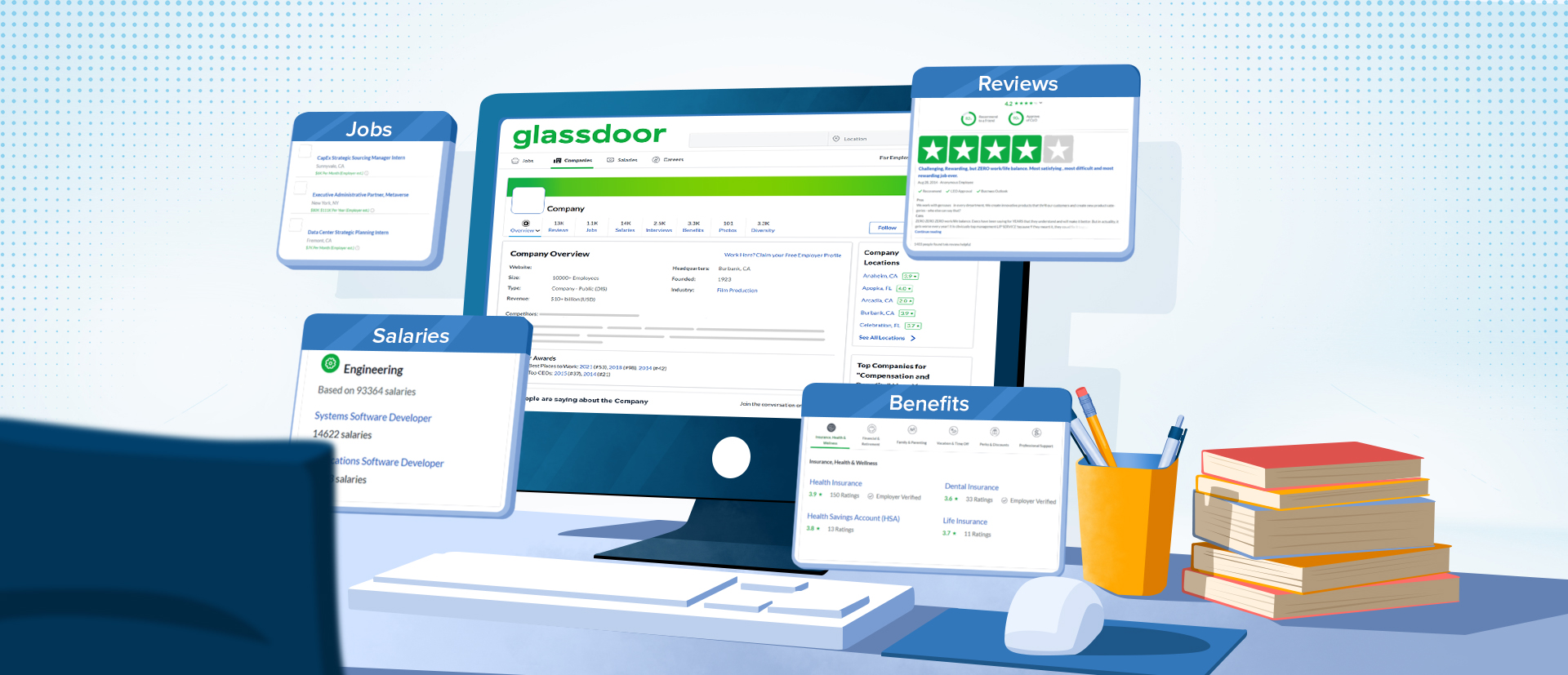
Plenty of job seekers rely on Glassdoor for employee reviews of companies, but it has another important use as well. Glassdoor can be a powerful resource for evaluating outsourcing companies. Here are a few of the most important reasons you should look at Glassdoor when you’re deciding what outsourcing companies you should work with:

1. Employees Are The Service

When you pay for the services of an outsourcing company, you’re paying for the performance of their employees. That means employee satisfaction can be an important indicator of the actual quality of what you’re paying for. 

Not only do happier employees perform their duties better, but satisfaction can indicate a number of things about how the company is run. Satisfied employees are more likely to have competent management, proper training, and higher performance.

2. Unvarnished Reviews 

More than overall employee satisfaction, Glassdoor is helpful for its individual employee and ex-employee reviews. While there are some ways to game the overall review metrics, employers can’t stop negative employee reviews from showing up.

That means that you get a real, unvarnished view of the actual thoughts of dissatisfied employees. Obviously, these reviews are biased, but you can glean real insights from them. Legitimate employee complaints can be a great way to learn about individual companies’ operational faults.

3. Understand Incentive Structures

Glassdoor also lets you see how companies compensate individual positions. That lets you see whether companies give their demand-generation professionals performance-based bonuses. 

Performance-based bonuses are an essential part of any demand generation team’s incentive structure, but some companies think they can save a quick buck by not properly compensating their employees. More often than not, this backfires, as poorly compensated employees lead to poor overall performance.

4. Evaluate Their Growth

Glassdoor can also let you know how many new positions a company is currently hiring for, and whether they recently went on a hiring spree. Hiring sprees can be good, as they can signal that a company got a recent round of VC funding or otherwise feels confident about its future.

But hiring sprees can also be unsustainable, and it’s important to know where the company got the money for a new batch of employees. Glassdoor can be a great jumping-off point for conversations about an outsourcing company’s growth. It can let you know whether they’ll still be around to partner with you in the long term.

5. Review Employee Resources

When you purchase the services of a demand generation outsourcing company, you aren’t just buying leads and dials. You’re also paying for their enterprise lead generation software; it’s part of why outsourcing makes sense in a recession.

Glassdoor reviews tell you whether employees got the tools they needed. They can shed light on whether the outsourcing company is investing enough money in essential equipment. Employees will report whether they had what they needed to succeed, and in turn, you’ll know where your money is going.

Glassdoor can be a great way to get an inside look at the ups and downs of demand generation outsourcing companies. It gives you as close to an unbiased view of how companies operate as you can get. If you’re looking at outsourcing companies, feel free to talk to Salaria about the services we offer as well!

Source:https://salariasales.com/5-reasons-to-use-glassdoor-to-evaluate-outsourcing-companies/

Wednesday, 15 February 2023

5 Reasons for Sales Outsourcing in a Recession

With growing suspicions that a recession is around the corner, sales leaders are trying to identify the best ways to prepare for a downturn. One of the most tested and effective methods of preparing for an economic recession is outsourcing parts of your sales organization.

It’s important to keep in mind that whether a recession comes, companies are already making decisions with a recession mindset. The recent series of sweeping tech layoffs signals that certain industry leaders are making decisions with an incoming recession in mind. In order to keep up, you need to make plans for what might be coming.

1. Cost Reduction

This is the first thing that people think of when they consider outsourcing, and it’s for a good reason: outsourcing can certainly help reduce costs. Outsourcing companies compete with full-time employees (FTEs), so they need to price their services below an FTE’s salary. 

But outsourcing can help you reduce more costs than just salaries. It can also eliminate costs related to management, HR and hiring, and support for that team.


2. Flexibility

The same factors that reduce the cost of hiring an outsourced team also make them easier to scale up and down. Outsourcing agencies already have the staff you’re looking for, as well as their own HR, management, and support teams.

That means that all you need to do is call up the agency and ask to scale your team up or down. You’ll have your new lead-generation professionals ready to go in days, as compared to the weeks that hiring quality employees can take. 

3. Hiring in the Job Market

While we associate recessions with mass layoffs, sometimes it’s necessary to prepare for a recession while the job market is still strong. That’s the case today: the job market doesn’t show concrete signs of slowing down, while corporations have started to struggle.

That means that you might need to hire employees in an expensive job market, knowing that the market could take a turn any day now. Instead, you can start working with an outsourcing company. Because outsourcing agencies are used to weathering downturns, their staffs are hired and ready to go. Not to mention the room for cost reduction mentioned above. 

4. Experience with Recessions

In fact, outsourcing agencies’ experience weathering downturns can come in handy in more ways than one. Outsourcing agencies have seasoned professionals that can often help you out in an advisory role, not just as outsourced salespeople.

Beyond just giving you general best practices in sales, the people you work with at outsourcing agencies can also act as sales consultants. While you might not find this relationship at certain kinds of agencies, such as pay-per-lead companies, companies worth working with will gladly provide it.  

5. Access to Sales Technology

Outsourcing agencies don’t just come with their own support teams. They also come equipped with all the technology they need in order to source leads for you. These enterprise technologies can be expensive and might not make sense if you’re a smaller business. But for outsourcing companies, they’re the normal tools of the trade.

Access to the latest in sales tech gives you the opportunity to source leads in ways your boutique competitors won’t be able to. In a recession, that doesn’t just save you money. It also gives you a unique advantage at a time when others are struggling to keep their heads above water.

If you’re interested in working with a top-of-the line, well-equipped sales outsourcing company that’ll save you money and bring your lead generation to the next level, feel free to reach out to Salaria.

Source:https://salariasales.com/5-reasons-for-sales-outsourcing-in-a-recession/

Sunday, 22 January 2023

5 Most Important Inbound Lead Management Tips

Inbound leads should be money in your pocket. To make sure that’s true, you need to remove any barriers between them and you. That means you need to make it as easy as possible for inbound leads to get in contact with you however they want.

It also means that you should get back to them politely but persistently, always ready to reply to them with what might seem like an unreasonably fast response time. If you’re always ready to respond quickly, politely, and persistently using accurate contact data, you’ll dramatically increase the money you make per inbound lead.

  1. Data Management

Good data management is one of the most underappreciated but essential parts of inbound lead management. You need to make sure you keep it safe and use it well. Lead and prospect data is a multibillion-dollar industry by itself, so if people are giving you their data for free, you should treasure it.

First, you need to make sure you’re storing that data securely. Your inbound leads have entrusted you with personal information, and you need to make sure that you’re validating that trust with proper security protocols. Those protocols will also help you make sure you’re in line with GDPR and other data privacy regulations.

Then you can make sure you’re capturing key contact information, such as email and phone number, and keeping it updated. After all, a work phone or email will change when someone gets a new job, but their interest in what you’re selling won’t.

2. Response Time

The Harvard Business Review famously showed an easy way to increase your qualification rate from calling inbound leads: faster response times. Calls made within five minutes of the lead inbounding have a 400% higher rate of qualification than calls made within five to ten minutes.

Of course, creating a response time that fast is easier said than done. But it’s absolutely worth the effort; responding faster is one of the best ways to increase your inbound lead qualification rate.

3. Availability

If you want to respond within five minutes to every inbound lead, your BDRs need to be ready for them 24/7. That means you either need people willing to work night shifts, an international BDR team, or an outsourced team that’s experienced with 24/7 inbound coverage. 

If you have any questions on how to set up a team like that, feel free to set up a call with our inbound lead management experts today.

4. Polite But Persistent

You can’t give up on inbound leads if they don’t respond to your first outreach. These are your most valuable leads, and they merit determined, professional efforts to get in touch. 

That doesn’t mean that you should overwhelm them with nonstop calls the first day they express interest. It just means that you should keep your company at the top of their mind with a steady flow of outreach.

5. Choose the Right Channels

A great way to make sure your outreach is persistent without becoming annoying is by choosing the right contact channels. Of course, the channel you should focus on should be the one they inbounded through. If they called you, call them back, and if they sent an email, reply in kind.

That way, you’re focusing your efforts where they should belong. If someone calls you, don’t just bombard them with constant emails.

Source:https://salariasales.com/5-most-important-inbound-lead-management-tips/

Sunday, 18 December 2022

5 Things People Hate About Cold Emails

9a468f95cb5292648218b61e8e33495e.jpg

You’ve gotten spam emails that made you sigh a bit before you ignored or deleted them. That’s why so many people think that cold emails make everyone mad–a lot of the time, the ones we remember the most are the worst ones.

But not every cold email has to be that bad. Many of them have these five factors that make them much worse than they need to be. By avoiding these, you can make sure your prospects don’t send your emails straight to the trash. 

1. Bad Jokes

As far as jokes go, it’s important to think of a balance between risk and reward. What’s the best-case scenario if they love this joke and what’s the potential damage from your audience disliking it?


A sense of humor is personal, which means that not everyone is going to share yours. Some of the worst cold emails I’ve received have included a joke that just wasn’t up my alley. It immediately creates a distance between the salesperson and the audience and ends up in the trash far more than a normal email would.

2. Too Long

One of the most important best practices in email marketing is restricting the length of your emails. We’ve seen emails that clients think are short, but remain far too long to meet our standards.

The fact of the matter is that people hate wading through paragraphs of text just for you to ask them for a meeting. The best way to make sure your audience doesn’t hate your emails is to keep them short and to the point.

3. Slow Starts

Speaking of getting to the point, it’s not enough just to keep your email short. You also need to tell your audience why you’re reaching out right away. That’s part of why your email’s first line is the most important part.

You should offer your audience a value proposition right as you begin the email. Let them know what exactly you can offer them, and then build any backing explanation you need.

4. Questions

Just like they did with essays high school, many people that don’t know how to start their cold emails will begin with a question. It’s a lazy, unengaging, and ultimately ineffective writing technique.

In almost every case, starting with a statement will be shorter, more interesting, and more clear. Questions sound like the beginning of a sales pitch, not how you’d open an offer to help someone out.

5. No Links

It’s okay to have links in your emails. Many salespeople think they’re being sneaky and evading spam filters by not including links in their emails. But while it’s important to know how to stay out of spam, leaving links out of your emails is hurting you more than it helps.

There are two kinds of links you should have in your email: a link to a place where the reader can find more information, and an unsubscribe link. Without the former, your reader couldn’t find out more about what you’re selling if they wanted. Even worse, leaving out an unsubscribe link could mean that you’re violating certain laws on spam emails.

If you want to start sending cold emails that get results, get in touch with Salaria Sales today.

Source: https://salariasales.com/5-things-people-hate-about-cold-emails/

Wednesday, 30 November 2022

5 Tips to Stay Out of “Spam”


5 Tips to Stay Out of “Spam”


Everyone from small businesses to the largest companies in the world faces problems with their sales and marketing emails going to spam folders. Every time that happens, those recipients don’t even get the chance to evaluate if they want what you’re selling. Getting sent to spam can dramatically reduce the number of people that see your marketing emails, so it’s important to follow these tips to stay out of their spam folders while keeping your sales and marketing emails as effective as possible.

1. Build Inbox Credibility

A brand new email account that’s suddenly sending out massive waves of emails out will look suspicious to email providers, and that behavior alone might cause them to send your messages to spam folders. To avoid that, you need to build your email address’s credibility.

Credibility comes from a number of different factors, but one of the most important is your inbox’s behavior. If you’re sending emails back and forth with people in regular conversations, you’ll look more normal than if you’re only using your email for large sales cadences. Inbox credibility-building tools automate the process of sending emails back and forth with others’ inboxes to create a record of that behavior.

2. Don’t Include Links or Files

Unsecure links and files look suspicious both to people and their email providers–and rightfully so. Unknown email addresses sharing links and files are often hiding malicious code like ransomware, so email providers will often filter out emails with those included.

This is especially true if there are links to multiple sites, a mix of linked images and embedded images, and attachments with strange names. All of these are major red flags for email providers and can be a major reason why emails go to spam.

3. Avoid Spammy Keywords

Email providers also look for certain keywords that signal if an email could be spam. While not every email with one of these emails is automatically directed to your spam folder, it can certainly be a contributing factor.

The most common spam keywords are related to the kinds of advertisements that usually come in spam emails. “Free,” “No-cost,” “buy,” “order,” and “affordable” are just a few of the most common, but there are complete lists of the relevant keywords available.

4. Get Your Signature Right

Your email signature is important. That’s why we’ve already mentioned it as one of the most important best practices in email marketing. But there’s another part of designing your email signature that you should pay attention to: the way you format its links and images.

As mentioned above, there are certain guidelines you should follow with links and images in general. Those are especially important to follow when you create your email signature. For example, if you include your company’s logo, you should make sure the file has a short and sensible name, and any link to a personal website should be short and secure. You should also make sure that any links you include only open one webpage, instead of using one link to open multiple tabs.

5. Don’t Go Overboard

It’s also important not to go too far with these tips. Don’t let them dissuade you from including any attachments or links in your email–great sales collateral can be a game-changer after all!

The most important part of keeping emails out of spam boxes is to act like a normal person. Send work emails from the same inbox, write normally, and don’t include strange files. If you follow these basic tips, you’ll dramatically increase the number of people seeing the messages you send out.

If you’re looking to get some more help with your sales and marketing efforts, you can also use the services of companies like Salaria. To schedule a call and see how you can get more eyes on your messaging, go ahead and set a meeting with us here .

Source - https://salariasales.com/5-tips-to-stay-out-of-spam/ 


Thursday, 27 October 2022

Why Cold Calling Isn’t Dead


It’s become trendy to say that cold calling is dead. Maybe it’s a way that some salespeople like to show they’ve “evolved” beyond more supposedly archaic sales practices. But that’s actually far from the truth. The most advanced B2B go-to-market teams consistently rely on cold calling as an integral part of their motion. That’s because nothing can substitute it.


B2B Cold Calling Culture

It’s important to note that while cold calling is alive and well in B2B sales, it’s a different story in B2C sales. Few consumers are making buying decisions on the phone, and the proliferation of scams and spam calls makes them suspicious even of legitimate businesses selling over the phone.

Many people come to B2B sales with a similar mindset. They don’t understand the mindset of executives that are used to getting cold calls from business leaders as a normal way of doing business. 

Those executives know to expect cold calls because they know their teams are cold calling as a part of their sales motions as well. Generally speaking, it’s a reciprocal relationship: there’s an agreed-upon way of doing business, and both the prospect and the seller understand what to expect from each other.

B2B cold calls are also more targeted than the cold calls that consumers get. Best practices involve sellers researching the prospect before dialing their number, meaning that they should know they’re pitching something relevant to their audience. 


Why Cold Calling Won’t Die

The most important reason why cold calling won’t die is that it works. Salespeople everywhere book meetings from cold calls daily. While naysayers cite statistics like “cold calling doesn’t work 90.9% of the time,” that’s actually a very optimistic view. If BDRs are booking a meeting with one in every ten cold calls, they’re hitting their monthly quotas quickly.

Even cold calls that don’t end in meetings have value. You can spread brand awareness with a positive conversation, and even voicemails are a great way to do personalized, outbound marketing. 

Text messages are popular among organizations from businesses to political campaigns for the same reason: people pay attention to them, and even the awareness they spread is valuable. 

Cold calling also works in more extended, complicated prospecting strategies. Some organizations have confusing ways of titling their employees, so it might be hard to find the right prospects just from the research you do online. 

Instead, you need to get your hands dirty and start asking questions to the people that know the answers, the ones already working at the business you’re trying to sell to.

If businesses could replace cold calling with something else, they would. It takes serious amounts of time and money, and it’s not able to be automated the way scaleable email sequences are.

They haven’t replaced it because they know it’s the best option available. Cold calling has unique benefits that you can’t substitute with any other medium of communicating with customers. But cold calling is best done by experts. That’s why businesses everywhere outsource their B2B cold calling to experienced teams like Salaria’s cold calling professionals. If you’d like to speak about how cold calling could accelerate your business’s growth, feel free to book a meeting with us today.

Source - https://salariasales.com/why-cold-calling-isnt-dead/

Thursday, 1 September 2022

How to Personalize Sales and Marketing Emails

personalize email marketing
Impersonal, spammy emails feel awful to receive, and do nothing for you if you’re sending them. But it’s important to know how to personalize intelligently, to maximize the benefits of personalization without getting bogged down in too many details.

If you can walk that line well, you can scale into a broad, profitable volume-based marketing effort. But personalization isn’t easy to scale, so it’s important you pay attention to the best ways to get a return on your effort.

What Personalization Should You Include?

What you should personalize in an email depends on what you can personalize with accurate information. For example, do you have good, quality data on a person’s job title? You probably don’t.

Job titles change rapidly, and most people don’t use their actual job title. Automated prospecting tools pull official titles like “Senior Product Manager III” or LinkedIn titles like “Sales Ninja,” neither of which should go in your email. So, you should avoid personalizing according to job title.

Instead, it pays off to use easily verifiable, numerical data points. For example, if you’re selling an HR platform, you could include a data point that refers to the number of employees at a prospective customer’s company: “With more than 500 employees to take care of, you’ve got a lot of data to track.”

Why Does Personalization Help?

Personalization helps your B2B sales prospecting for a few different reasons. It helps a person understand how your product is immediately relevant to them, it grabs their attention more forcefully than a generic hook ever could, and it also helps you get through spam filters.

When you personalize with the customer’s needs in mind, you write sales and marketing emails that show them why they need what you’re selling. You’re targeting them for a reason–they need your product, and all you need to do is bring your messaging in line with how you found them in the first place.

Personalization also grabs your audience’s interest with immediately relevant details. If you’re reaching out to someone, it’s because they fit into your target audience, and you can be open about that. Tell them that you can help businesses of their size, that use the tools they do, or any other relevant details that explain why they’re an especially good fit for you.

It’s also important to note that good personalization helps make sure your emails get through to the right folder. If you end up in Spam, you’ll never get read or be taken seriously, and personalization can help make sure that doesn’t happen. Spam filters are getting more advanced, and they’re looking for emails with generic language that sounds like it’s from a marketer.

How Do I Test Personalization?

Once you’ve figured out the perfect, personalized email, it’s important to test it. Your emails are the face of your company, so you need to make sure you’re presenting them as well as possible.

To test your emails, don’t rely on the previews that automated email tools will provide you. Those don’t show what the emails will look like across different mailboxes, on different devices.

Instead, send your email to multiple inboxes – Gmail, Outlook, Yahoo, and others. Look at them on a computer and on a phone, and watch out for even the slightest changes in font size and other important details.

Source:https://salariasales.com/how-to-personalize-sales-and-marketing-emails/

Elevate Your Business Strategy with Our Expert Consulting Services

At Salaria Sales, we understand the pivotal role strategic consulting plays in propelling businesses towards unparalleled success...